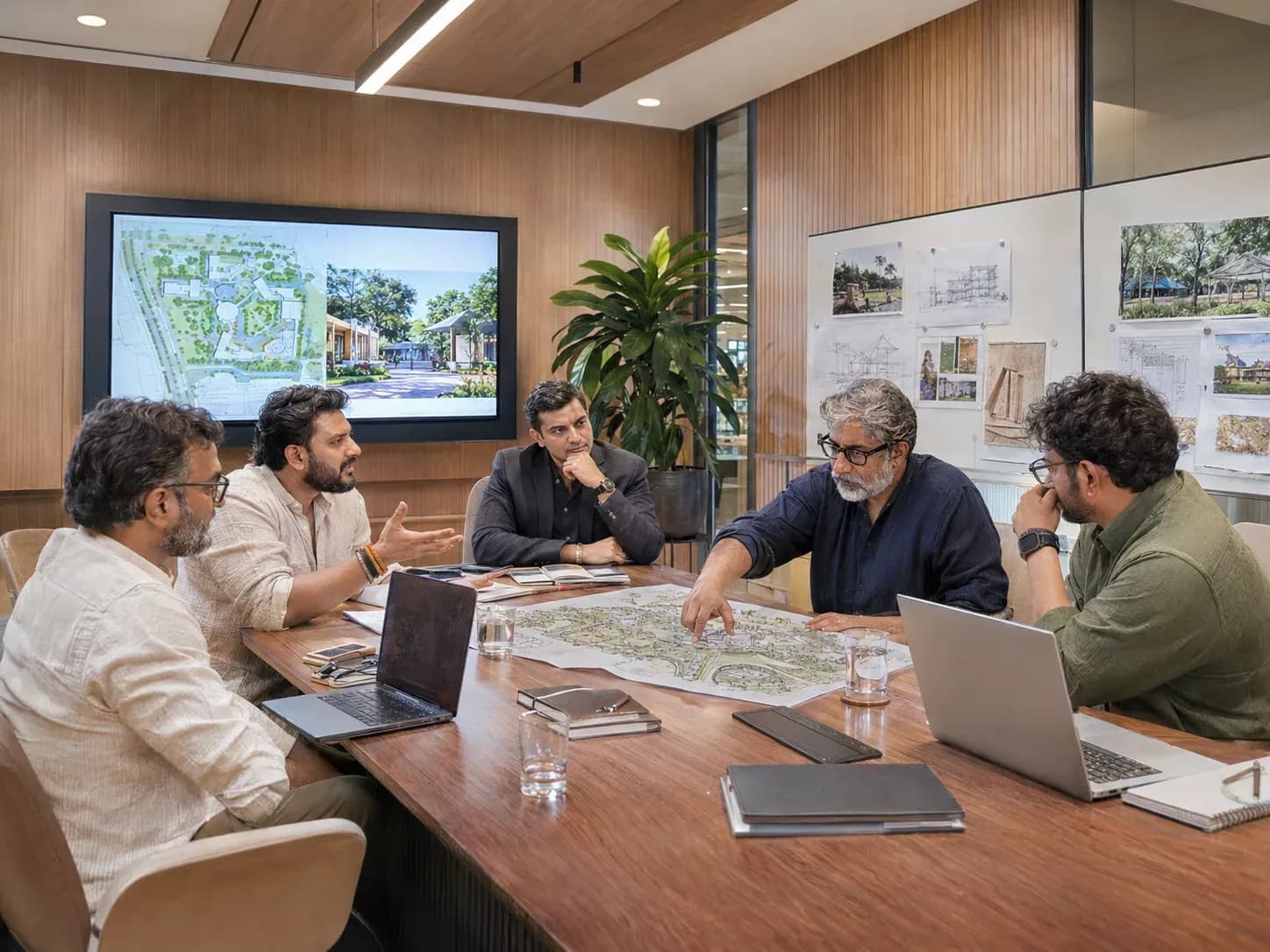
Experience centre consultants
Mast Parks works as experience centre consultants. Our feasibility study starts with what the centre must teach or show, who it is for and what the site can hold
- What it is
- A feasibility study for an experience centre: the message, the audience, the site and the experiences that deliver it
- Who it is for
- Government and tourism bodies, institutions, developers, private landowners and trusts
- Where it applies
- Experience centres, interpretation centres and visitor attractions built around a message
Experience centre consultants: what they do
Experience centre consultants advise an owner on how to turn a message into a place people walk through, touch and remember. Mast Parks gives this advice as the first of its 13 services and can carry the project through experience centre design to opening. An experience centre exists to explain something: a region, an idea, an industry or a future. The study begins with that message and with who needs to receive it.
Why the study comes first for an experience centre
A message that is not sharpened early becomes a set of displays nobody follows. The study fixes what visitors should understand, which audiences matter, how long a visit should last and what the site can hold. It also tests how content will be kept current after opening. See immersive museums and edutainment parks.
What the study looks at for an experience centre
The message
What visitors should understand, in one sentence, and how it breaks into topics.
The audience
Students, families, tourists or professionals. Each learns differently.
The visit
Length, route and the points where visitors act, not only read.
The site
Land or building, access and what zones it can hold. See museum and interpretation centre design.
Technology and upkeep
Interactive and immersive installations need maintenance and fresh content. The study notes the running needs. See immersive experience design.
How the experience centre study runs
- Receive the brief: the message, the sponsor and the site.
- Define the message and the audience.
- Test the visit, the zones and the site against them.
- Review similar centres and the running needs.
- Recommend the centre and its first phase, with reasons, for the owner to decide.
How experience centre consultancy differs from other parks
A theme park is led by a story and an amusement park by rides. An experience centre is led by learning. The same planning skills apply, but each zone carries one idea and each landmark exists to explain it. Compared with a spiritual park or an ecological park, the audience is often institutional and the success measure is understanding, so the study defines it up front. Mast Parks uses the same 13 services for every type and weights concept creation most heavily here.
Where Mast Parks has done this
An experience centre in Uttar Pradesh. A 10-acre centre themed around India's future, with zones for mobility, space, digital technology and clean energy, a welcome robot and a dome theatre. Mast Parks provided concept creation, theme development, master planning, architectural design and project management consultancy. See all experience centre projects.
How Mast Parks' services apply to an experience centre
- Feasibility study tests the message, the audience and what the site can hold.
- Financial planning sets the budget, the phasing and the running needs.
- Concept creation turns the message into zones and landmarks.
- Theme development gives the centre a consistent look and voice.
- Master planning sets the route and the zones.
- Architectural design produces drawings and installation detail.
- Project management keeps the build to plan.
- Content and events keep the centre current.
What you bring and what you receive
An owner brings the message, the audience in mind, the site and a view of the budget. The owner receives a recommendation on the centre's concept, zones and first phase.
Key point: Bring the message and the site; receive a zoned plan
Government and tourism bodies, institutions and universities, developers adding a public attraction, and trusts that want visitors to understand a place or an idea.
What can go wrong without a study
A centre without a clear message becomes unconnected displays. Technology without upkeep can fail within months. A route that ignores how long people will stay can leave visitors tired or rushed. A study cannot remove every risk, but it shows them early.
Questions to ask before you start
- What should visitors understand when they leave?
- Who is the main audience?
- How long should a visit last?
- Is the site land or an existing building?
- Who will keep the content current?
Experience centre consultants in India
Mast Parks' experience centre work in India includes a 10-acre centre in Uttar Pradesh. Audiences, languages and local approvals differ by state, so the study considers them before recommending a concept
Terms used on this page
- Experience centre. A place that explains an idea through interaction.
- Interpretation. Turning facts into something visitors understand.
- Zone. An area built around one idea.
- Landmark. The feature that anchors a zone.
- Catchment. The area from which visitors can travel.
Frequently asked questions
What do experience centre consultants do?
They advise on the message, audience, zones and first phase of a centre.
How is it different from a museum?
It leans on interaction and immersion more than collections.
Does it need a theme?
A consistent look helps visitors follow the message
Can it sit inside a larger park?
Yes, as a zone, if the route allows it
What comes after the study?
Concept creation, master planning and drawings