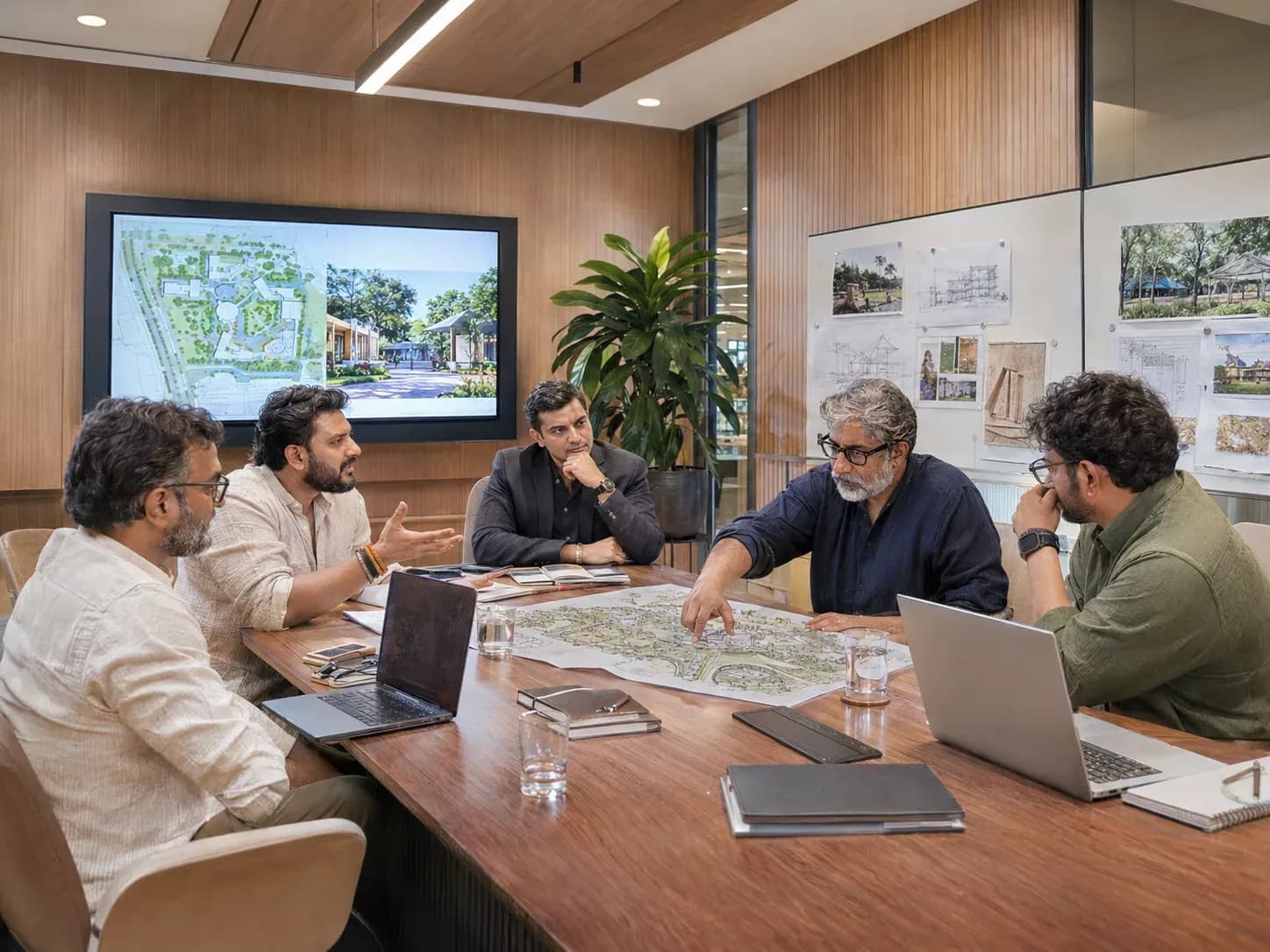
Theme park consultants
Mast Parks works as theme park consultants. Before design begins, our feasibility study looks at the site, the location and the audience, and tests whether a story-led park suits the land
- What it is
- A feasibility study for a theme park: the space, the location, the audience and the theme the land can carry
- Who it is for
- Private landowners, existing park owners, family businesses, government and tourism bodies, and temples and religious trusts
- Where it applies
- New theme parks, and existing parks that want to be re-themed
Theme park consultants: what they do
Theme park consultants advise an owner on three things: whether a theme park belongs on a given site, what its story should be, and how much park the market can carry. Mast Parks does this work as the first step of a project that can continue through all 13 services, from the study to opening day. A theme park differs from other parks in one way that shapes all the advice. The theme is the organising idea, not decoration. Zones, rides, food and merchandise follow one story, so the study has to test the story as well as the site. Theme park design then turns the chosen direction into a master plan.
Why the study comes first for a theme park
A story is cheap to change on paper and costly to change after construction. A theme chosen before the audience is understood may not interest the people who live nearby. A story that does not fit the land fights the site at every turn. The study settles three questions before any drawing starts: whether the site supports a theme park, which theme suits it, and what the park can earn beyond the gate, through food, events and merchandise. The blog on how to start a theme park in India covers the wider steps.
What the study looks at for a theme park
The site
Size, shape and surroundings. A theme park needs zones that connect, so the study checks whether the land can hold them in a sensible order. See theme park layout and zones.
The audience
Who can reach the park and what they look for. Families, tourists and young adults each want a different day out.
The theme
Which stories or ideas the place and the audience can carry. A theme can be original, or it can come from open sources, as Jungle Adventures did with the Jungle Book.
The competition
What other parks within reach already offer, so the new park gives visitors something they cannot get nearby.
The earning model
Tickets are one source of income. Food, events and merchandise are others, and they only work when they belong to the story. The study gives a first view of this, and financial planning then tests it in detail. Read how theme parks make money.
How the theme park study runs
- Receive the brief. The owner shares the land or the park, the location and any early idea.
- Study the site and the catchment. What the land can hold, and who can reach it.
- Test themes against both. A short list of themes is checked against the site and the audience.
- Review the competition and the earning model.
- Recommend the park and the theme, with the reasoning, for the owner to decide.
How theme park consultancy differs from other parks
The same study asks different first questions for each kind of park. In a water park, the weather and the water attractions lead. In an adventure park, zoning by activity and risk leads. In an ecological park, the condition of the land leads, and restraint matters most. In a spiritual park, respect for the tradition leads. In a theme park, the story leads. For rides-led parks see amusement park consultants. That is why theme development starts early in a theme park project, while in other parks it may come later. Mast Parks covers all eight park types with the same 13 services and gives each service a different weight for each type. One team follows the project from the first study to opening day, so the story set in the study is the story the park opens with.
Where Mast Parks has done this
- Nicco Park. Eight mascots and merchandise designed for an operating park with eight zones: seven continent-themed zones and a snow park.
- Dreamasia. An operating amusement and water park re-themed around its name, with zones for Asian countries, mascots and a dark ride with original content.
- Fun World. An amusement park, a water park, an aquarium and a snow park brought under one theme.
- Jungle Adventures. An adventure park in a tea estate, themed on the Jungle Book using open IP. See all theme park projects.
How Mast Parks' services apply to a theme park
The study comes first, and the same team can then carry the park through the services below.
- Feasibility study tests whether a story-led park suits the land and the catchment, and which theme the place and the audience can carry.
- Financial planning tests what the park needs and what it may earn from tickets, food, events and merchandise, once the theme is chosen.
- Theme development gives the park its story, its look and its mascots. For a theme park this is first-order work.
- Concept creation turns the chosen direction into an idea for the whole park.
- Master planning places each zone so that the guest's route follows the story.
- Ride and attraction planning chooses and customises rides to serve the story, not the other way round.
- Merchandising and content and events extend the theme to products, food and shows.
- Operations planning and team hiring and training prepare the people who run it.
What you bring and what you receive
An owner brings the land or the existing park, a view of the budget and any early idea of the theme. An idea is not needed to start. The owner receives a recommendation on which park and which theme suit the site, with the reasons. The study does not commit the owner to anything further.
Who needs theme park consultants
Private landowners with open land, existing park owners who want a park re-themed, family businesses adding a new line of business, government and tourism bodies planning a destination, and temples and religious trusts weighing a visitor experience. Fun World and Dreamasia show the re-theming case.
What can go wrong without a study
A theme borrowed from somewhere else may mean little to the people nearby. Zones built without a shared story feel like separate parks sharing a gate. A story that is too large for the budget ends up half built. None of this is certain, and a study cannot remove all risk. It shows the risks while the owner can still change the plan.
Questions to ask before you start
- Is the land open, or is there a park already running?
- Which stories matter to the people who live nearby?
- What size of first phase is realistic?
- Who is the park for: families, tourists or both?
- Does the story need to be original, or can it come from open sources?
Theme park consultants in India
Mast Parks' theme park work is in India, and the study is built around where the park will stand. Climate, land and local approvals differ from one region to another, and so do the audiences. The study looks at these before it recommends a theme. The projects above, from Nicco Park to Jungle Adventures, show the range of Mast Parks' work in India, from re-theming a running park to a themed adventure park in a tea estate.
Terms used on this page
- Theme. The story or idea that ties every part of the park together.
- Zone. A themed area of the park with its own look and rides.
- Open IP. A story or character that anyone may use, such as the Jungle Book.
- Mascot. A character that stands for a zone or the whole park.
- Catchment. The area from which guests can travel to the park.
Frequently asked questions
What do theme park consultants do?
They advise on whether a theme park suits a site, which theme fits and how much park the market can carry, before design begins.
Is a theme park different from an amusement park?
An amusement park is built around rides. A theme park is built around a story, and the rides, food and shops follow it.
Can an existing park be re-themed?
Yes. Mast Parks has re-themed running parks, including Dreamasia and Fun World
Does the study need an idea first?
No. Land, a location and a budget range are enough to begin.
What happens after the study?
Financial planning tests the return, concept creation shapes the idea, and theme development gives it a story, a look and mascots.