
Theme Parks
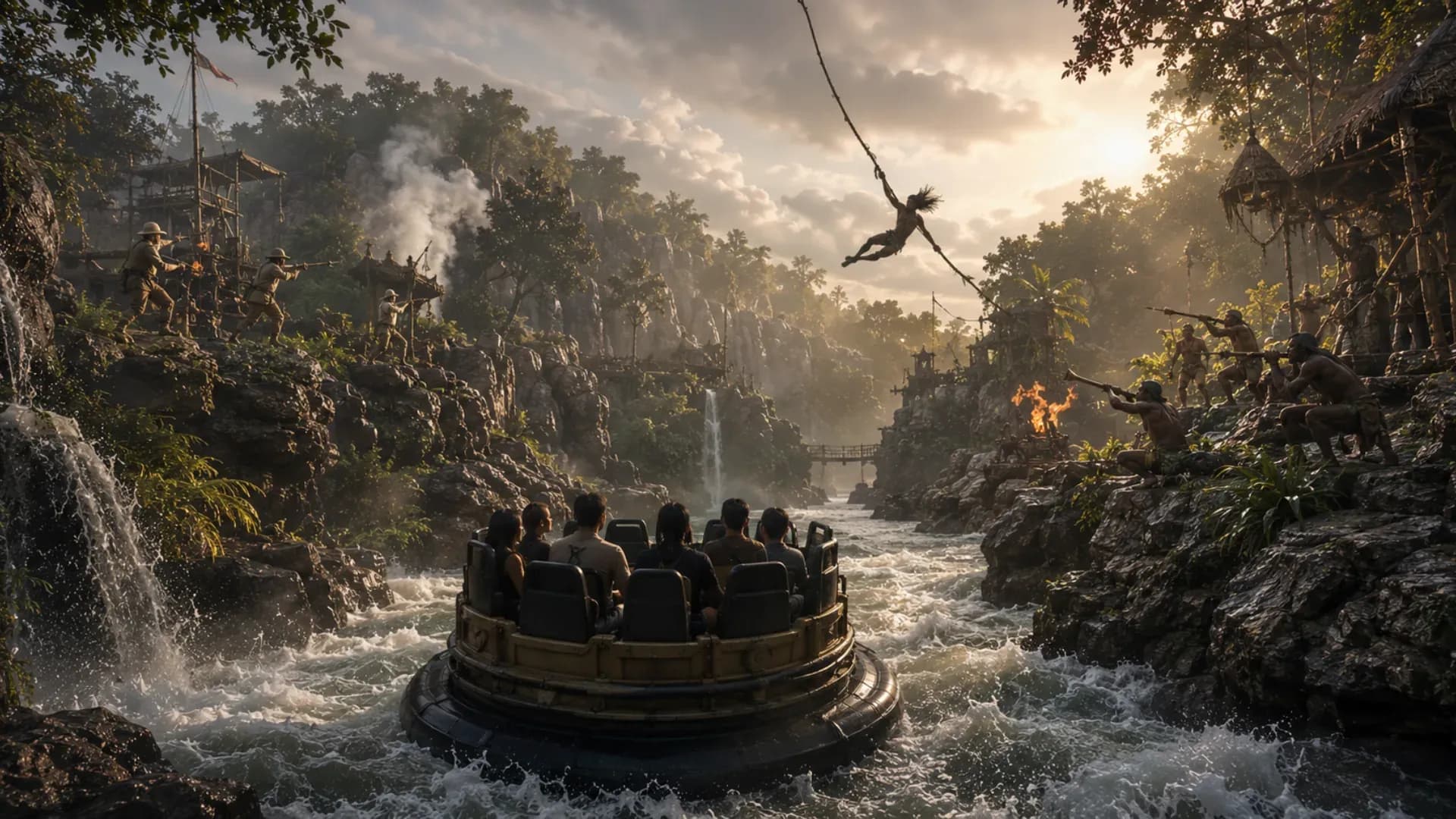
Mast Parks designs and builds theme parks, with projects so far: parks where the zones, rides, food and merchandise follow one story. Every Mast Parks project is themed, from Dreamasia to Jungle Adventures.
- What it is
- A park whose zones, rides, food and merchandise follow one story
- Who it is for
- Private landowners, existing park owners, family businesses, government and tourism bodies, and temples and religious trusts
- Where it applies
- Any location. Mast Parks has themed water parks, amusement parks, adventure parks and themed family entertainment centres.
Theme parks: one story from gate to gift shop
A theme park is a park whose zones, rides, food and merchandise follow one story. Mast Parks designs and builds theme parks, with projects so far. Every Mast Parks project is themed, from Dreamasia to Jungle Adventures. This page introduces the work: what a theme does for a park, how Mast Parks develops one and which parks it has themed.
Each service named here has its own page with the detail.
Why a theme matters
A theme gives a park one idea to be remembered by. Without it, a park is a set of rides. With it, the rides, the food, the signs, the staff and the merchandise all say the same thing, and a guest can describe the park in a sentence. A theme also gives the park something that competitors cannot copy easily: its own story.
Mast Parks develops the theme through theme development and carries it into the master plan, the attractions, the mascots and the merchandise. A theme is an option, not a rule: Mast Parks also builds parks without a theme if the client asks. A feasibility study decides which suits the site.
A story is what makes a theme park uniquely themed and designed, compared with a park that only installs rides. When the whole park follows one theme, guests get an immersive and consistent experience, and the food and merchandise connect to the theme and stay relevant within the park. Theming also helps a park differentiate itself from others.
What theme development produces
- A story. The idea every zone belongs to.
- A look. The colours, materials, buildings and landscape that make the story visible.
- Mascots. The characters that carry the theme and become the base for merchandise and events.
- Revenue streams. Food, events and merchandise built around the theme.
- Placement. Where each part of the theme appears in the park, decided in the master plan.
A theme can come from mythology, nature, a region, a culture or an original idea. Mast Parks works from the site and the audience, so the theme belongs to its place.
How the 13 Mast Parks services apply to a theme park
Mast Parks organises its work as 13 services in four stages. For a theme park, the services work as follows. An owner can start at any stage, and many owners use the full set from idea to opening.
- Concept and Planning. Feasibility Studies decide whether and what to build. Financial Planning tests the return on investment. Concept Creation and Theme Development give the park its idea, story, look and mascots.
- Design and Execution. Master Planning is the blueprint, and for this park type it is offered as theme park design. Architectural Designing produces the construction-level drawings, and Project Management Consultancy oversees the build.
- Rides, People and Operations. Ride and Attraction Planning selects vendors. Team Hiring and Training prepares the team. Operations Planning sets the procedures and safety.
- Launch and Growth. Marketing and Branding, Merchandising and Content and Events bring guests in and keep them coming back.
See all 13 on the services page.
How Mast Parks has themed parks
Nicco Park. Eight mascots and merchandise designed for an operating park. The park has eight zones: seven continent-themed zones and the snow park, with a mascot for each. Read the article.
Dreamasia. An operating amusement and water park re-themed around its name, with zones representing Asian countries, mascots and a dark ride with original content. Read the article.
Fun World. An amusement park, water park, aquarium and snow park brought under one theme. Read the article.
Jungle Adventures. An adventure park in a tea estate, themed on the Jungle Book using open IP. Read the article.
A Mast water park in Rajasthan. An indoor water park with peacock feather and curd pot motifs. Read the article.
See all theme park projects.
How a theme park project usually runs
- Step 1
Decide what to build
A feasibility study and financial planning decide whether a theme park suits the site and the budget.
- Step 2
Find the idea
Concept creation gathers the location, the audience, the rides and the regional or cultural themes.
- Step 3
Build the theme
Theme development produces the story, the look, the mascots and the revenue streams.
- Step 4
Fix the layout
Master planning places the theme, the zones and the rides in the blueprint.
- Step 5
Deliver
Architectural designing, ride planning and project management turn the plan into a built park.
- Step 6
Open and grow
Training, operations, marketing, merchandising, content and events prepare the park for guests and keep them coming.
Who commissions a theme park
Theme parks are commissioned by private landowners, existing park owners, family businesses, government and tourism bodies, and temples and religious trusts. Some start from open land. Others have a park that already runs and want it re-themed, as Fun World and Dreamasia did.
Questions to ask before you start
Owners get more from the first conversation when they arrive with answers, or at least with a view, on the points below. None of them needs to be settled in advance, and Mast Parks can help to settle them.
- What is the story you want guests to take home?
- Is the park new, or is an existing park to be re-themed?
- Who is the audience, and how far will they travel?
- Does the theme use a story or character that someone owns?
- What is your budget range, and over what period?
Further reading
Read how to build a theme park, how to start a theme park in India, how a theme park is designed and what makes a theme park unique. To discuss a park for your site, use the contact page.
Working with Mast Parks
Mast Parks works with the owner at each step. The owner approves the work before it moves to the next stage, and revisions are part of the process. The owner knows the site, the region and the ambition. Mast Parks brings experience of designing and delivering parks across eight park types. The best results come when the two work as one team, with decisions made quickly and in the open.
To start a conversation, use the contact page. Mast Parks will ask about the site, the park you have in mind and where you are in the project.
How Mast Parks decides whether a theme suits
Not every site needs a theme, and a theme is not free. The feasibility study and financial planning test whether a theme adds enough to justify its cost, and what kind of theme fits the audience. Where a theme suits, the work goes on to concept creation and theme development. Where it does not, the park can still be planned well, without one.
What can go wrong without a theme
A park without a clear theme can look like any other park with the same rides. Guests find little to remember and little to tell others. A park that adds theming late often has to rework designs or construction. A theme that is not carried through into staff, food and merchandise can feel like decoration rather than story. Planning the theme from the start, and carrying it through every service, avoids these outcomes.
Themes for existing parks
A theme does not need a blank site. Many parks start without one and find, over time, that they need something to set them apart. Re-theming gives an existing park a new story and look, without rebuilding from nothing. Mast Parks re-themed Fun World and Dreamasia, and themed Nicco Park throughout. In each case, the park kept its rides and its place, and gained an idea to hold them together.
Terms used on this page
- Theme. The concept made physical: its story, look and mascots.
- Mascot. A character that represents the park or one of its zones.
- Re-theming. Giving an existing park a new theme.
- Open IP. Material that anyone may use, as with the Jungle Book at Jungle Adventures.
- Concept. The idea for the park, before the theme is fixed.
Frequently asked questions
What is a theme park?
A park whose zones, rides, food and merchandise follow one story.
Does a park need a theme?
No. Mast Parks builds parks with or without a theme. A feasibility study decides which suits the site.
Which theme parks has Mast Parks worked on?
Dreamasia, Fun World, Jungle Adventures and a Mast water park in Rajasthan, among others.
Can an existing park be re-themed?
Yes. Mast Parks re-themed Fun World and Dreamasia, and themed Nicco Park.
What does theme development include?
The story, the look and the mascots, plus the revenue streams built around them: food, events and merchandise.
Can a park use an existing story or character?
Rights matter when someone else owns the story or character. Jungle Adventures uses open IP for the Jungle Book. Mast Parks works with global IP owners, and supports each park with the most unique story or character, so that visitors connect with what the park offers.
How much does a theme park cost?
It depends on the project and the effort it needs: the park type, the size of the site and the services chosen. Mast Parks scopes each project with the owner, so the owner pays for the work that project needs. To discuss yours, use the contact page.
How long does a theme park project take?
It depends on the project: the size of the site, the park type and the scope of the work. Mast Parks agrees a timeline with each owner at the start, so the owner can plan funding, approvals and the opening around it.